
Imperialism – From The Bottom Up
Edmund Burke (1729-1797), an Anglo-Irish writer, philosopher, politician, and founder of conservatism. Burke was elected as a member of Parliament (MP) from 1766 to 1794 in the House of Commons of Great Britain. Burke is remembered for his long-term support for Catholic emancipation, his opposition to the French Revolution, and his support for the grievances of the American Thirteen Colonies under King George III.
Edmund Burke called the Acadian expulsion a textbook example of a dominant superpower abusing its authority by destroying a stable society rather than integrating peacefully. Burke believed that an empire’s right to rule was bound by moral restraint, justice, and the duty to preserve local communities, with absolutely no right to destroy them. For over 250 years, Edmund Burke’s assessment of imperial abuse still falls upon deft ears. This is a tragic story of family separation and resilience.
Acadia Port-Royal (1604-05) was the first permanent European and French settlement north of Florida. A French (Acadian) community that, over the course of the next six decades, was attacked, burned, and changed hands between the French and British several times.
Jacques Bourgeois and Guillaume Trahan, Acadian pioneers, blood relatives, and direct ancestors, were recruited to build a community in the New World. Jacques Bourgeois and Guillaume Trahan became syndics des habitants, patriarchs from the core founding families elected by the town assemblies.
Guillaume Trahan arrived as a tradesman (maréchal de tranchant), a master toolsmith and blacksmith specializing in edge tools: axes, knives, and agricultural blades. Guillaume rose from a skilled tradesman to one of the most trusted civic leaders.
In 1641, Jacques Bourgeois (c. 1621–1701), roughly 20 years old, a military surgeon, boarded a ship to Acadia bound for Port Royal. Jacques would become a merchant, shipbuilder, colonizer, and founder of the community of Beaubassin, from which our ancestors emanated.
The First Sirre/Cyr in America: In 1644, Jacques Bourgeois married Guillaume’s eldest daughter, Jeanne Anne Trahan. Jeanne gave birth to Marie, their fourth child. In 1652, Marie Bourgeois became our first relative born in North America. Marie married gunsmith Pierre Sirre/Cyr. Pierre, born in France, would be the patriarch of the North American Cyr/Sire lineage.
Under British military occupation (1654-1667), all French immigration ceased; Acadians survived through farming and trade alliances with the Mi’kmaq Nation. The Treaty of Breda (1667) ordered the British to return Acadia to the French Crown, initiating new immigration of French tradesmen. Acadians in the New World numbered 400 people.
Pierre Sirre/Cyr (c. 1644–c 1679) traveled to Acadia around 1668. Pierre was a gunsmith and armorer (armurier). Recruited for his skills to maintain the tools required for hunting, fur-trading, and local militia defense. Within two years, he married Marie Bourgeois, Jacques Bourgeois’s daughter. By now, Bourgeois was a wealthy and influential surgeon-merchant.
Father-in-law Jacques Bourgeois established a highly lucrative commercial network with British merchants in Boston, exchanging Acadian furs and grain with New England captains. The 1671 census reflected his immense success as one of the wealthiest men in Port Royal, owning 33 head of cattle, 24 sheep, and extensive cultivated acreage.
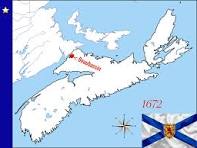
Beaubassin -Where It Begins
In 1672, he sold a significant portion of his valuable real estate in Port Royal to finance a brand-new, independent settlement along the Chignecto Isthmus. Jacques brought along his sons, daughters, and son-in-law, Pierre Sire. There, they built the first flour mill and saw mill, in what would become the Acadian village of Beaubassin.
Beaubassin grew from a lone frontier outpost in 1672 into a booming, independent economic powerhouse. By the 1740s, it became one of the most successful chapters in Acadian expansion. Beaubassin, due to its unique location on the Isthmus of Chignecto, transformed into a critical hub for both agriculture and international trade. The Cyr family became resident experts in the aboiteau diking and farming the reclaimed land.
The Next Generations – Growth of the Sirre/Cyr
Pierre Sirre, around 1679, passed, leaving his widow, Marie Bourgeois, with three small boys: Jehan, Jean Pierre, and Guillaume. She remarried in 1680. Her second husband, Acadian Germain Girouard, raised the boys in a combined household on the Bourgeois estate in Beaubassin. The brothers established new farms along the Chignecto Isthmus.
Jean-Pierre (1677–1741) worked the family’s lands, operating as a primary agriculturalist and community elder. Jean-Pierre married Claire-Angélique Cormier (1684–1741), from another foundational Beaubassin family, deepening the family networks across Beaubassin.
Jean-Pierre and Claire raised a massive household of at least 11 children. The boys in this household became expert aboiteau builders, expanding the family’s landholdings. Jean-Pierre and his wife Claire-Angélique died in 1741. The peaceful “Golden Age” of Acadia was about to end. Their deaths spared them from witnessing the destruction of the farms and community they and their family had built.
Their eldest son, Pierre Cyr (1711), married Anne Poirier (January 1735). They took over the management of the family’s valuable, diked marshland estate in the core Beaubassin district. They were raising their children, including Jean (b. 1736), Pierre Jr. (b. 1738), and Anne-Marie (b. 1740). Jean-Pierre and Claire left behind several younger children. Pierre and Anne effectively became surrogate parents to his younger brothers and sisters while running the frontier farm.
In the defrocked Roman Catholic priest and author, Abbé Guillaume-Thomas-François Raynal’s (1770) book, Histoire philosophique et politique des établissements et du commerce des Européens dans les deux Indes (The Philosophical and Political History of the Establishments and Commerce of Europeans in the Two Indies). In his book, he paints a picture of Acadia as an earthly paradise populated by simple, happy, and moral pastoral farmers. He emphasized their self-sufficiency, isolation from European corruption, and peaceful coexistence with indigenous populations. The work that follows validates Abbé Raynal’s conclusion that the greed, violence, and moral corruption of European colonial expansion led to the catastrophic destruction of Acadia.
Beaubassin – Caught In An Imperial War
The 1740’s ended the peaceful Golden Age of Acadia. Now a prominent community leader, Pierre had his entire world dismantled by a series of imperial wars between France and England. Beaubassin became a hegemonic battleground.
During King George’s War (1744–1748), Beaubassin became a highway for military activity. Throughout 1746 and 1747, French troops, Canadian militia, and Mi’kmaq allies billeted inside the homes of Beaubassin’s Acadian farmers. French troops and Mi’kmaq fighters from Quebec used Beaubassin as a staging ground to launch attacks against the British garrison at Annapolis Royal. From the British perspective, this forced action ruined the Acadians’ political neutrality.
Most Acadians, like Pierre (1711), maintained neutrality; however, French officers forced local farmers to provide livestock, wheat, and manual labor to feed the troops. Refusal meant French partisans would retaliate with raids on their farms. Compliance brought British authorities threats of execution for treason. Pierre’s daily existence became an exhausting exercise in survival and diplomacy.
The signing of the Treaty of Aix-la-Chapelle in October 1748 officially ended King George’s War. The treaty failed to clearly define the border between the French and English empires, specifically the Missaguash River. Beaubassin was on the east side (British side) of the Missaguash River.
Shortly after the end of King George’s War, Pierre and Anne’s lives abruptly changed again. Pierre and Anne had established a massive homestead in Beaubassin. France claimed the Missaguash River (running west of Beaubassin) as the border. Britain claimed all of the Missaguash region. Beaubassin, a French-speaking independent community, was on the British side of the Missaguash River. Control of Beaubassin meant control of the corridor connecting Nova Scotia (British) and French North America.
Both empires constructed fortifications surrounding the Missaguash River, putting Beaubassin in harm’s way. Beaubassin became a militarized border zone between the British and French empires. The British were suspicious that Beaubassin Acadians were traitors and collaborators.
Beaubassin was one of the largest, wealthiest, and most agriculturally productive Acadian settlements in the region. The British wanted to bring the local population under firm British administration and prevent their resources from feeding French garrisons. They wanted to use the village’s agricultural output to supply British fortifications.
In 1749, French troops came from Quebec to claim the territory north of the Missaguash River. The British responded in the spring of 1750 by sending Major Charles Lawrence and 800 British troops, who sailed into the Cumberland Basin to seize the village. Recognizing that the British were targeting the town for its strategic and logistical value, the French-aligned force and Mi’kmaq fighters set Beaubassin on fire. A scorched-earth military action, culminating in the destruction by fire of the colony of Beaubassin, destroying over 140 homes, barns, and including the parish church of Notre-Dame-de-l’Assomption, and the Mi’gmaq chapel of Sainte-Anne, systematically setting fire to every single civilian structure.
Cyr – The Driftwood Is Cast
Roughly 1,000 Acadian civilians stood on the river banks and watched their life’s work burn to the ground. Among the homeless Acadians stood Pierre Sr., Anne, and their children. As they watched French and Mi’kmaq soldiers set fire to their family homestead, barns, farm, crops, and the historic Church of Notre-Dame-de-Beaubassin (the church where they were married). Armed French soldiers and Mi’kmaq fighters compelled the fleeing families to cross the Missaguash River into French-controlled territory to the north.
The displaced families built makeshift shelters under the shadow of the newly constructed French stronghold, Fort Beauséjour. They fled across the Missaguash River into French territory. The destruction of Beaubassin directly accelerated the onset of the Great Upheaval (Le Grand Dérangement), which devastated the entire Acadian population. Out of an estimated population of 14,100 Acadians, approximately 11,500 people were forcibly rounded up and deported by the British military.
When the British arrived, they found that the French and their First Nation allies had set Beaubassin on fire; they withdrew. The Acadians of Beaubassin fled to the north side of the river. By the fall of 1750, the French and their allies destroyed all the remaining Acadian communities south of the river. Most Acadians were now living as displaced refugees in French territory. The clash at Beaubassin marked the end of attempts at peace and began more than a decade of upheaval and violence in the region.
The displaced families sought refuge in the French-backed region near Fort Beauséjour. They joined thousands of other starving Acadians, fleeing from different destroyed communities. At Camp d’Espérance on the Miramichi River, there were temporary refugee camps “under the protection of French troops.” They helped to build this makeshift refugee camp under the shadow of the newly constructed Fort Beauséjour.
For the next five years, Pierre (1711) Sr. and family, displaced by war, lived as vigilant refugees. The 1752 Census has him and his family living as refugees in Memramcook (just west of the fort). To receive meager government food rations from the French Crown, Pierre Sr. and his teenage sons, Jean and Pierre Jr (b. 1738), were forced by the French military to help clear forests, build roads, and dig heavy earthen ramparts for Fort Beauséjour.
Note – Although I will follow my direct lineage of Beaubassin refugees (Pierre Cyr -1711), the fire at Beaubassin acted as a geographical wedge that permanently divided the children of Jean-Pierre (1677–1741) and Claire-Angélique Cormier (1684–1741). Within one generation, the family was transformed from a single neighborhood cluster into four distinct global branches: the Madawaska pioneers (on the Maine-New Brunswick border), the mainland French-Canadian farmers and loggers of Quebec, the island fishermen of Saint Pierre and Miquelon (off the coast of Newfoundland), and the Cajun populations of the American South (Louisiana).
The Cleansing Begins – Le Grand Dérangement
On July 4th, 1755, fifteen Acadian leaders refused to sign an Oath of Allegiance to the King. They refused to take the oath, as they had done before. This new oath removed the “Neutrality Clause” that had protected the Acadians since 1730, meaning it would force them to bear arms against fellow Frenchmen and Indigenous allies.
British Chief Justice Belcher proclaimed, “Persons who have once refused to take the oath are … ‘Popish Recusants.“ Governor Lawrence ordered the fifteen Acadian delegates escorted across the harbor to Georges Island to Fort Charlotte to await vessels for deportation. Thus began the forced removal of all Recusants out of the Province known as the Le Grand Dérangement.
By this time, in July 1755, Pierre’s (1711) household had swelled with the births of his youngest children, including toddler Michel. They were completely destitute, exhausted from five years of camp life, and highly vulnerable when British forces finally attacked the fort. British forces captured Fort Beauséjour in Chignecto and began a systematic roundup and imprisonment of local Acadian men.
The Cyr Driftwood Is Split
In October 1755, British troops launched synchronized ambush sweeps across the Chignecto area, capturing the adult men, including Pierre, his eldest son Jean, and daughter Anne-Marie. Pierre Cyr Sr. was highly vocal in his resistance and refusal to submit to the British authorities at Chignecto; he was not a submissive civilian.
Governor Lawrence designated Pierre and 20 others as ringleaders and chief promoters of the disturbance against the Crown. Retribution ensued, and Pierre and two of his children were arrested. Their forced capture was part of the British removal of all Recusant Arcadians from the Province, the Le Grand Dérangement.
Pierre Cyr – A Rebel With A Cause
Rather than allowing families to board vessels together, the British command split the Cyr family into different ships that departed on the same day. Pierre Sr., identified as one of the 21 ringleaders and chief promoters of the disturbance, was isolated from the general population. He was stripped of his family, heavily guarded, and loaded onto the HMS Syren.
By the time of Cyr’s arrival in Charleston, South Carolina, colonial officials deemed a small group of Acadian men—including Pierre—too hostile and dangerous to release. So, South Carolina authorities banished these dangerous rebels. The ship set sail for England, completely severing the chances of him locating his children in Charleston.
Once in England, British officials transferred Pierre to Rochefort, France. Pierre refused to accept his exile and boarded the Chariot Royal in an attempt to return to North America. The Chariot Royal was intercepted at sea by the British Royal Navy. Pierre, taken prisoner a second time, was transported back to Plymouth and then to Portsmouth. Historians note he died in exile before April 1763, likely in a British naval prison hospital or back in the ports of Rochefort, France, from the accumulated diseases of his multi-ocean voyages.
Pierre’s Captured Children
Jean Cyr (b. ~1738), 17-year-old son of Pierre, was rounded up separately with standard civilian laborers. Jean was forced onto the brigantine Two Brothers under Captain James Best. This ship held 132 Acadian exiles. Anne-Marie (b. 1740), 15-year-old daughter of Pierre, was held hostage with other women and adolescent girls and was loaded onto a different, standard family transport ship destined for the American South. Both Anne-Marie and her brother Jean were part of the same October fleet that transported her father to South Carolina.
Anne-Marie (b. 1740) Path
The journey of Pierre’s two indentured children took a different path. The physical separation of the father and his children happened in the harbor of Charleston, South Carolina colony. The ships full of Acadian deportees dropped anchor in Charleston, South Carolina, within days of each other. The Two Brothers arrived on November 11, 1755, while the HMS Syren arrived between November 15 and 19, 1755. Jean (b. ~1738) and Anne-Marie (b. 1740) were allowed to disembark in Charleston as destitute refugees. South Carolina archives record that because the local government refused to feed them, the young Acadians were distributed to local plantations and urban households to work as indentured servants.
South Carolina’s climate, heavy disease outbreaks, and hostile local authorities made survival difficult. Historical records note that a massive portion of the Acadians assigned to South Carolina immediately pooled what little money they had to buy or construct small coastal vessels. Anne-Marie joined a flotilla of these small boats that slipped out of Charleston harbor.
Navigating in secret up the Atlantic coast, her group managed to bypass British blockades. They successfully made landfall in French-controlled Acadia, finding temporary asylum with other escapees along the Miramichi River and Camp d’Espérance, terrain that was impassable to British regular infantry but highly familiar to the Acadians. Anne found the Maritimes entirely occupied by the British. Word quickly spread along the Acadian underground network that a significant portion of the Chignecto refugees had been evacuated by the French to the Quebec City area before the fall of New France.
Following the signing of the Treaty of Paris in 1763, travel restrictions eased. Anne-Marie traveled up the St. Lawrence River pipeline, specifically hunting for her mother and siblings. She migrated further north into French Canada. She safely relocated to Quebec province. Records indicate that she tracked down her surviving older brother, Pierre Jr., and her mother, Anne Poirier.
Jean Cyr (b. ~1738) Path
Brother Jean Cyr’s escape from indentureship took a different course. Jean was deported from Acadia on the vessel Two Brothers. Two Brothers departed the Chignecto area on October 13, 1755, and landed in Charleston, South Carolina. The South Carolina Council voted to distribute the young, able-bodied Acadians to various local parishes and plantations to serve as indentured agricultural laborers.
Jean’s servitude on a subtropical plantation did not last long. Jean befriended two fellow Chignecto exiles, Benjamin Thibodeau and Honoré Breau. In the winter of 1756, the trio broke out of their assigned plantation quarters. Jean and his companions decided to escape via land.
After walking over 300 miles, the group crossed the colonial border into Virginia. Their French accents and lack of travel papers immediately gave them away. A local Virginia militia patrol intercepted the starving young men, arrested them, and threw them into a Virginia jail as suspected French spies.
Virginia’s colonial governor, Robert Dinwiddie, dealing with the French and Indian War on his own western frontier, refused to harbor Acadian refugees, viewing them as rebels who, if given the opportunity, would join the French military. Governor Dinwiddie ordered that all Acadians caught in Virginia were to be expelled. In May 1756, Jean, Thibodeau, and Breau were marched out of their Virginia jail cells and loaded onto a transport ship bound directly for the British Isles.
The ship crossed the Atlantic and docked in Bristol, England. Jean, with a record of escape, was formally classified as a Prisoner of War (POW). Jean spent the next seven grueling years (1756–1763) locked away in overcrowded, unsanitary British naval prisons and barracks surrounding Bristol. He survived on meager prisoner rations while the Seven Years’ War raged across the globe.
The Treaty of Paris (1763) ended the Seven Years’ War (French and Indian War). Britain was legally required to release its French prisoners. In May 1763, Jean boarded a cartel ship to Rochefort, France. Jean spent a few years living among the stranded Acadian communities in the coastal ports of France, but he struggled to adapt to European societal norms.
Jean boarded a ship to the tiny, rocky French-controlled territory of Saint Pierre and Miquelon (just off the coast of Newfoundland). The 1763 Treaty of Paris declared that France surrendered its continental North American territories but was allowed to retain the tiny archipelago of Saint Pierre and Miquelon as an unfortified fishing base. The French island became a prime destination for displaced Acadians seeking to live under French rule.
On May 15, 1767, French records have Jean arriving “at his own expense” on the tiny French territory of Saint Pierre and Miquelon. Safe back in North America and on French soil, he married Apollonie dit Paulette Poirier, also a refugee from Beaubassin.
In 1778, Jean’s life was disrupted again. During the American Revolutionary War, France backed the American colonies. In 1778, British forces retaliated by raiding Saint Pierre and Miquelon, burning the settlements, and forcibly deporting the population back to France. Jean was sent back across the Atlantic once more. Records indicate that he lived his final decade in France. He passed away on September 3, 1802, in Port-Louis, Morbihan, Brittany, France, at approximately 64 years of age.
Wife Anne Poirier and Son Pierre Cyr Jr (1738) Path
Back home, Anne Poirier and her children evacuated Camp d’Espérance and managed to break past the British military perimeter. They utilized the dense, marshy woods flanking the Petitcodiac and Memramcook Rivers to avoid British capture and deportation. Anne Poirier (Pierre’s 1711), wife and 17-year-old son, Pierre Cyr Jr (1738), became the protectors of the household, guiding the remaining children to escape.
After the British burned their lands (1755), they decided to flee. They slipped past checkpoints into the northern forests. Using Mi’kmaq portage trails, waterways, and remote outposts, threaded their way to the northern coast. Protected by Acadian guerrilla fighters led by Charles Deschamps de Boishébert, provided with food rations and hiding spots for fleeing families. Continuing northward, they reached the eastern shoreline of New Brunswick. The family walked the coast toward Cocagne and the Miramichi River delta along the Northumberland Strait.
Cyrs On PEI?
Anne used her connections to secure passage on a small, local fishing boat (bateau) to cross the Northumberland Strait, a body of water separating Île Saint-Jean (Prince Edward Island) from the mainland, in Cocagne. Under the cover of night or thick coastal fog to avoid British naval cutters patrolling the Northumberland Strait, they crossed the water and made landfall on the southern coast of Île Saint-Jean. Anne, teenager Pierre, and younger siblings crossed the Strait and made landfall on Île Saint-Jean, still under French control.
Once safely on the French-controlled island, they joined thousands of other displaced Acadians who had overwhelmed the local French infrastructure. When Anne Poirier arrived on Île Saint-Jean as a displaced mother with her young children, she wasn’t wandering aimlessly. She was seeking a safety net of her siblings, in-laws, and cousins from the Beaubassin community. The 1752 Sieur de la Roque (for Île Saint-Jean) census and subsequent colonial registers show the exact relatives Anne was searching for.
The broader Trois-Rivières region on Île Saint-Jean (intersection of the Cardigan, Brudenell, and Montague Rivers) was the hub for the Cormier and Bourgeois arrivals. Because Anne Poirier’s mother was a Bourgeois and her maternal grandmother was a Cormier, she had deep-rooted family support here. Cousins, such as Pierre Cormier and Jean-Baptiste Cormier, refugees of earlier days, helped build shelters for incoming families.
Port-la-Joye was the main administrative and military hub. Anne’s brothers (The Poiriers), Michel Poirier and Pierre Poirier, were involved in coordinating food distributions from the French garrison for the incoming waves of starving refugees. Pierre Cyr’s extended family was also scattered through this central district.
In the late 1750s, as the island’s conditions deteriorated into severe famine, these families formed a tight-knit underground communication network. When French authorities quietly organized the evacuation ships to Quebec in October 1757, it was this exact network of Poirier, Cyr, and Bourgeois relatives that helped Anne secure passage for herself and her children.
By late 1757, a severe crop blight destroyed the island’s grain supplies, forcing the French administration to coordinate a mass evacuation to Quebec City. It was during this crisis that Anne and Pierre Jr. gathered the surviving children—Marie-Rose, Marie-Claire, Marie, Anastasie, and toddler Michel—to board the crowded transport ship that ultimately brought them into the St. Lawrence River.
Back To The Mainland
In October 1757, Anne boarded one of two refugee transport ships leaving Île Saint-Jean. After a three-week journey up the St. Lawrence River, she docked at the port of Quebec City. Mother Anne Poirier, her teenage son Pierre, and the younger children officially made landfall at the port of Quebec City in late autumn 1757. October 1757 marked the beginning of a family relocation process along the St Lawrence River.
The family stepped off the vessel onto the docks of Quebec City’s Basse-Ville (Lower Town). They arrived destitute in a colony already experiencing severe food shortages. Almost immediately upon landfall, a devastating smallpox outbreak tore through the arriving Acadian refugee populations. Between November 1757 and March 1758, hundreds of Acadians died in the capital’s makeshift barracks and hospitals.
To save her remaining children, Anne Poirier kept her family isolated from the city center, surviving on meager municipal bread rations distributed by Intendant François Bigot’s colonial administration. By the spring of 1758, the French colonial government realized that keeping thousands of starving, sick refugees clustered in Quebec City was a major military and health liability. The Governor ordered the systematic dispersal of Acadian households along both shores of the St. Lawrence River. Families were assigned to seigneuries (land districts) further inland, or upriver. French authorities dispersed the surviving Cyr families up the St. Lawrence River to Batiscan, a Jesuit refugee community.
The family traveled approximately 50 miles by boats (bateaux) pulled or rowed against the St. Lawrence current southwest (upriver) from Quebec City to reach their assigned billet in Batiscan. They made final landfall at the Seigneury of Batiscan, a secure agricultural enclave managed by the Jesuit order. While Batiscan was geographically safer than the frontline war zones, the journey and the subsequent winter migrations proved fatal to the youngest family members.
Earthen camp shelters and malnutrition compromised the children’s health, leading directly to the parish burial records: Anastasie Cyr succumbed first, buried by the parish priest on January 3, 1759. Toddler Michel Cyr passed away shortly thereafter during the identical wave of winter camp deprivations. Anne Poirier and young Pierre (c. 1738) continuously worked the local Batiscan fields for the next four years, keeping the surviving daughters alive until the 1763 Treaty of Paris.
Anne Poirier, her son Pierre Jr. (b. 1738), and the surviving daughters then traveled from Batiscan to Beauport in the spring of 1763. This move represents their final migration as refugees. With the signing of the Treaty of Paris in February 1763, the Seven Years’ War officially ended, and the family was finally free to leave their government-mandated billeting in the Batiscan seigneury to seek permanent roots.
In 1763, the family packed what few belongings they had managed to accumulate during their five years of farm labor in Batiscan. Pierre, now a young man of about 25, his mother, and his sisters journeyed along the Chemin du Roy to Beauport. The family had to pass directly under the shadow of Quebec City’s high stone walls and the port where they had landed during the famine of 1757.
In April 1763, the Cyr’s made final landfall in the parish of Nativité-de-Notre-Dame de Beauport, an agricultural community along narrow farms extending from the riverbanks. Almost immediately upon arriving in town, Pierre and his mother met with a local royal notary in Beauport to draft and sign his marriage contract with the French-Canadian widow Marie-Charlotte Isoir dit Provençal, whose husband was a casualty of war, likely the Plains of Abraham. Two days later, the family gathered in the Beauport parish church to witness the wedding.
The Cyr family ended their eight years of wandering as Acadian refugees. Pierre moved directly onto the established landholdings of his new wife’s family. His mother, Anne Poirier, and his younger sisters finally had a stable, permanent roof over their heads, transitioning fully into the fabric of the Beauport community where our ancestor, Pierre Cyr (b 1768), my great-grandmother (Mim’s) father, would be born five years later.

